Photography for dairies and cheesemakers
A cheese is recognised by three things: the colour of the paste, the pattern of the rind, the way it opens when cut. They are the first things a buyer looks at and the first things a photograph gets wrong, because they all sit inside a narrow range of whites, ivories and straws, where half a tone is enough to change the product. Photographing cheese means working in that range, without the help of easy contrast, and showing the difference between a ricotta, a primo sale and an aged pecorino to someone who cannot touch them.
White is not one colour
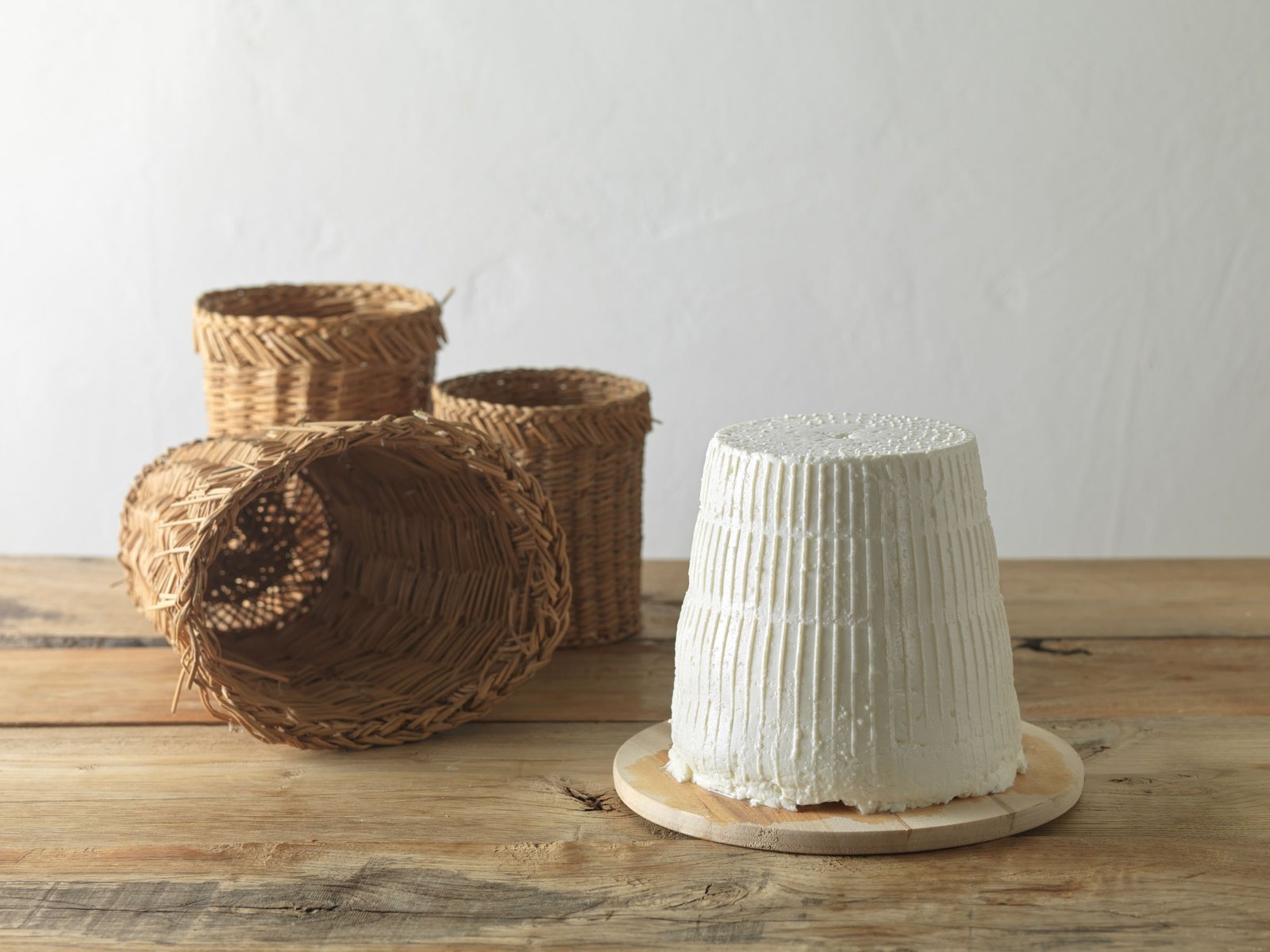
The full white of a ricotta, the ivory of a fresh cheese, the straw of an aged paste: they are different colours, and buyers read them as data. They also depend on the milk — cows carry the carotenoids of their feed into the milk, which turn the paste yellow, while sheep and goats convert them into vitamin A, which has no colour, and give whiter cheeses. A photograph that shifts that colour by half a tone tells the story of a different product. It is held with a colour reference on set and an exposure that keeps the whites full without burning them: a burnt-out white has no grain and no shape left, it becomes a silhouette.
The rind is the pattern of the form
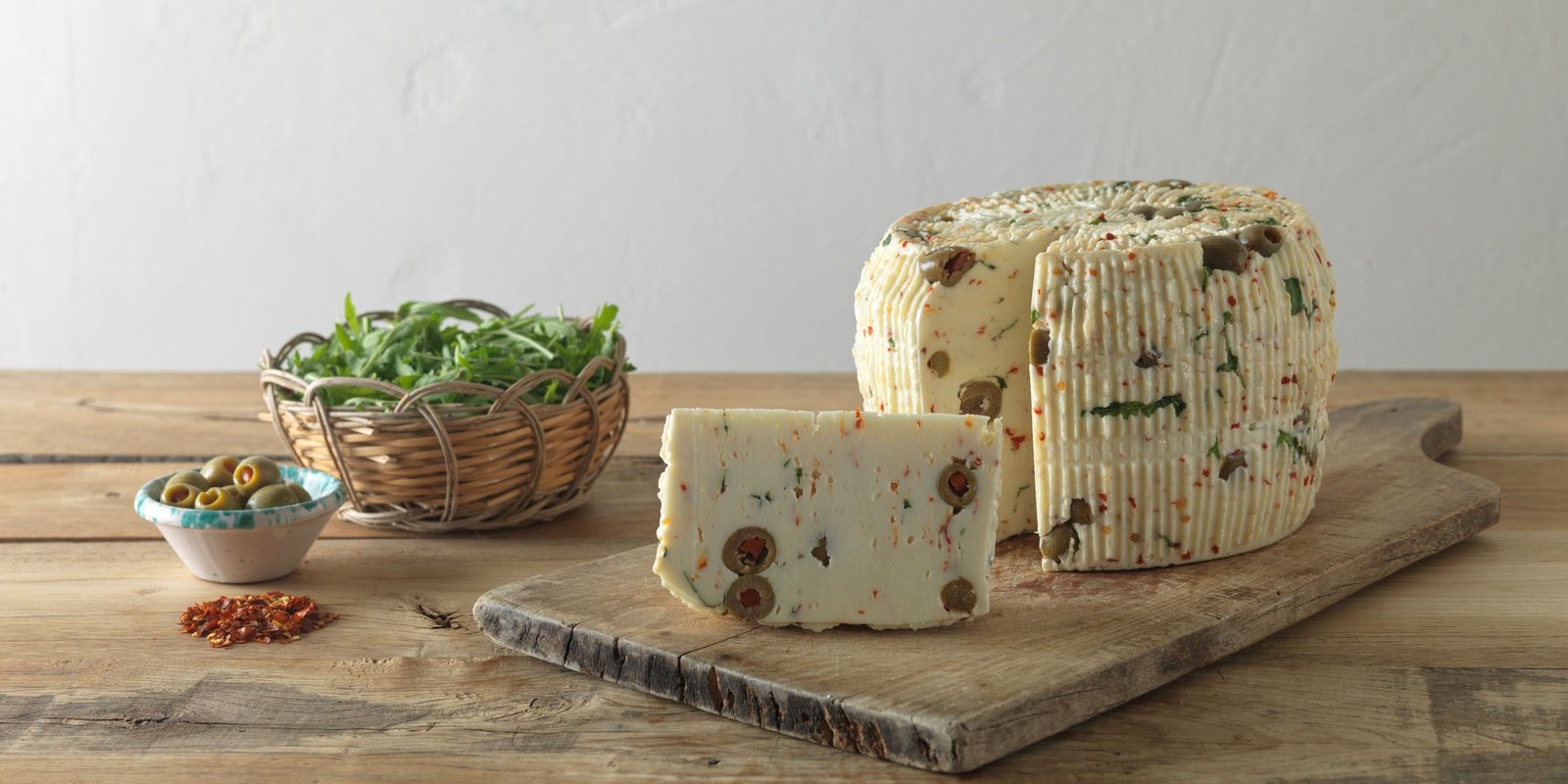
The ridges of a canestrato are the grooves left by the rushes of the basket it took shape in; other rinds carry the weave of the mould or the marks of ageing. It is the part of the cheese people recognise on the shelf, and it is also what frontal light wipes out: lit from the front, an aged wheel becomes a brown cylinder. It needs side light, low enough to raise the relief, and a background that is not the same tone as the rind.
The cut shows the paste
Once opened, a cheese shows what it is: a compact or crumbly paste, small eyes or large ones, peppercorns, olives, pistachio, chilli. The cut decides what can be seen, and it is chosen before the photograph: a wedge opened a centimetre further along may not show a single olive. That is why the cheese is cut on set, in front of the camera, and cut more than once. A freshly opened surface is the right one, and it does not stay right for long.
Under the lights, cheese sweats
As soon as it warms up, a cheese starts to bead: it is the fat rising to the surface. A fresh cheese just out of its pack gathers moisture, a ricotta keeps losing whey, an aged paste dries and cracks along the edge of the cut. None of this is fixed well afterwards on screen. It is fixed beforehand: the set ready and the light already metered when the cheese comes out of the fridge, and several pieces at hand to swap the one that has stopped looking its best.
The dairy, when milk becomes cheese
The vat, the curd being broken, the hands filling the moulds, the ricotta rising from the hot whey and lifted out with a skimmer. No customer ever walks into a dairy, and hardly any dairy has up-to-date images of what happens inside: it is the material the institutional pages need, and the importer's presentation, and the supply-chain story. It is photographed as it happens, within the rhythm of production and in line with hygiene protocols. And the move between the steam of the make room and the cold of the ageing rooms is planned for, because it fogs the lens exactly when you need it.
Which services
See all services-
Packshot & packaging
The product on its own, the way a buyer sees it: on the product page, on the marketplace, in the price list. The same background and light across the range, colour checked against the real pack.
-
Styled food & recipes
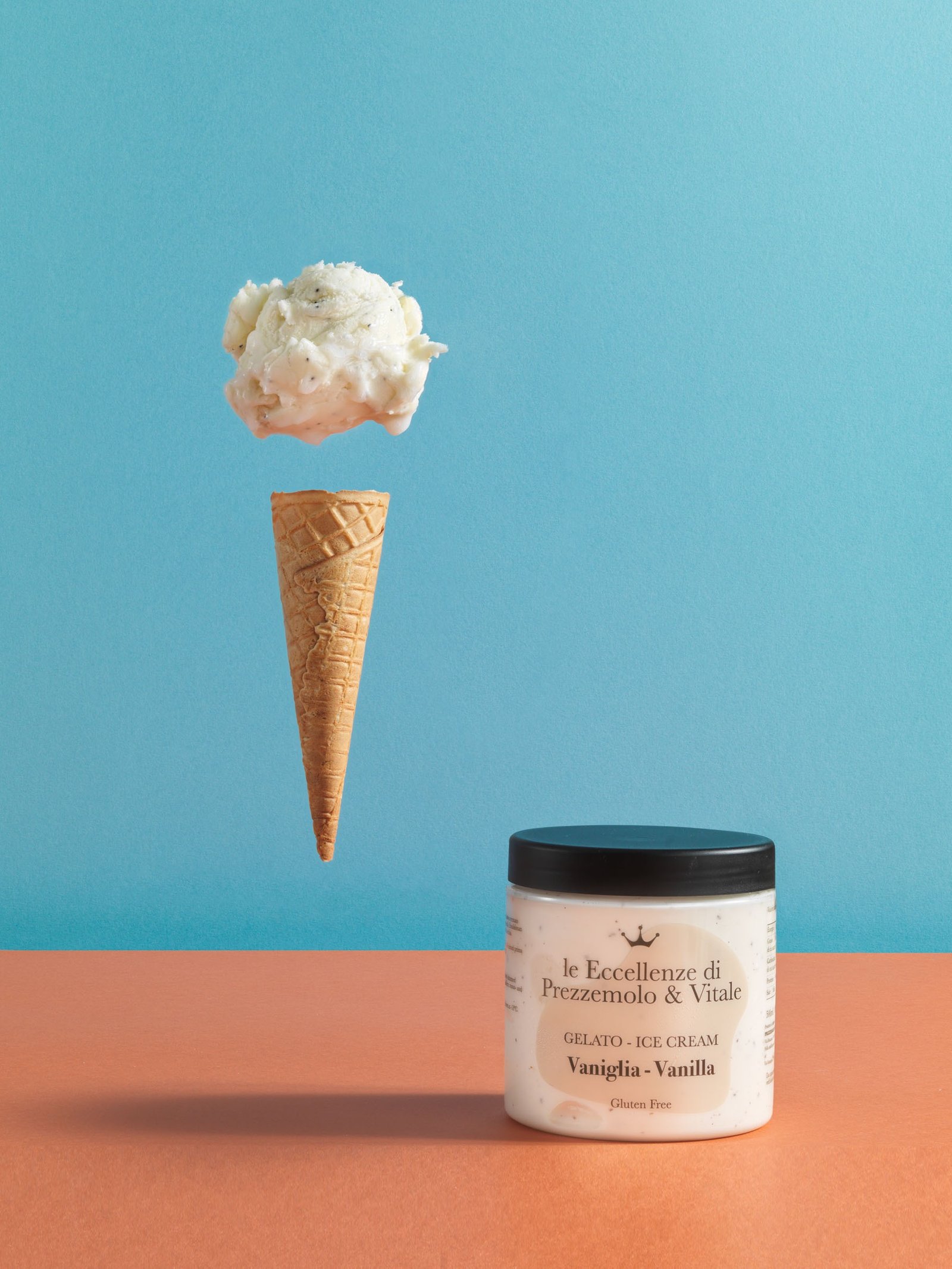
The product on the table, on the plate and in the glass. A set built for that product, styling, recipes: the photograph that shows how what you make gets enjoyed.
-
Advertising & catalogues
Catalogues, campaigns, trade-fair material. A direction agreed before the set, holding from the billboard to the price-list page and from one season to the next.
-
Industrial & factory reportage
Raw material, processing, people at work. The story of how the product is made, for the website, importers, retail buyers and the sustainability report.
Let's talk
Tell us what needs photographing
The more detail you give us, the more precise the quote: how many products, which channels the images are for, and when you need them. We reply within one working day.