Packshot and packaging photography for food, wine and olive oil producers
The packshot is the hardest-working photograph you own and the least noticed. It lives on the product page, on the marketplace, in the price list, in the buyer's deck — and almost never on its own: it sits in a row with the rest of the range. So clean is not enough. It has to match every other shot down to the last grey of the background, show the real colour of the pack, and keep doing so when the range grows next year.
Seen in a row, not one at a time
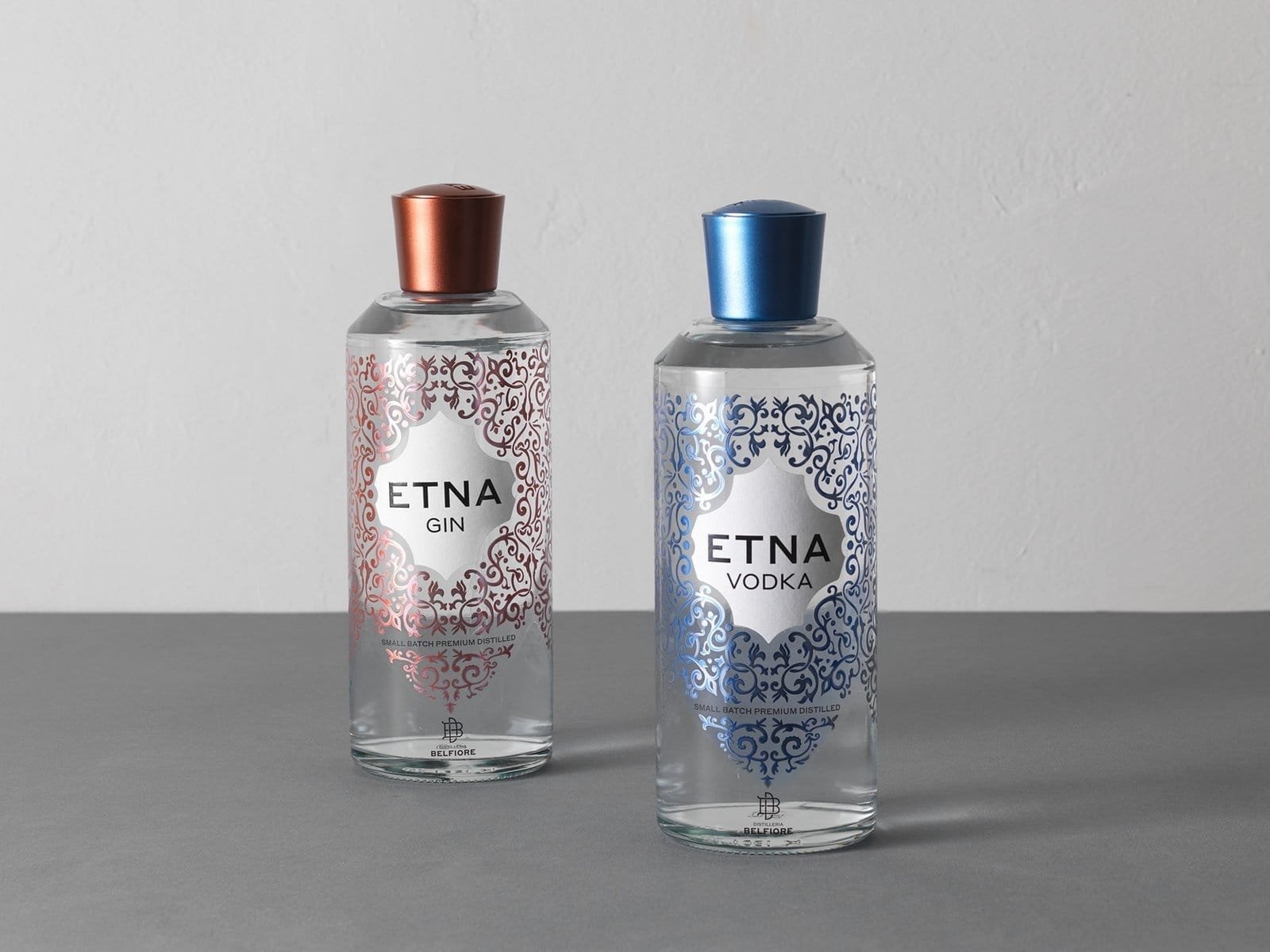
A product photograph on its own can look perfect. The flaw shows when it sits next to the others: a background a touch warmer, a longer shadow, a bottle shot from slightly higher, and the page looks assembled from three different shoots. Across the thirteen Dispensa Sicilia photographs the materials could hardly be more different — clear glass, amber glass, clear bags with a paper band — and the background, measured in the files, is identical from the first to the last. That is why, in a row, they read as one range.
The project Dispensa Sicilia · Side by side
The colour of the real pack
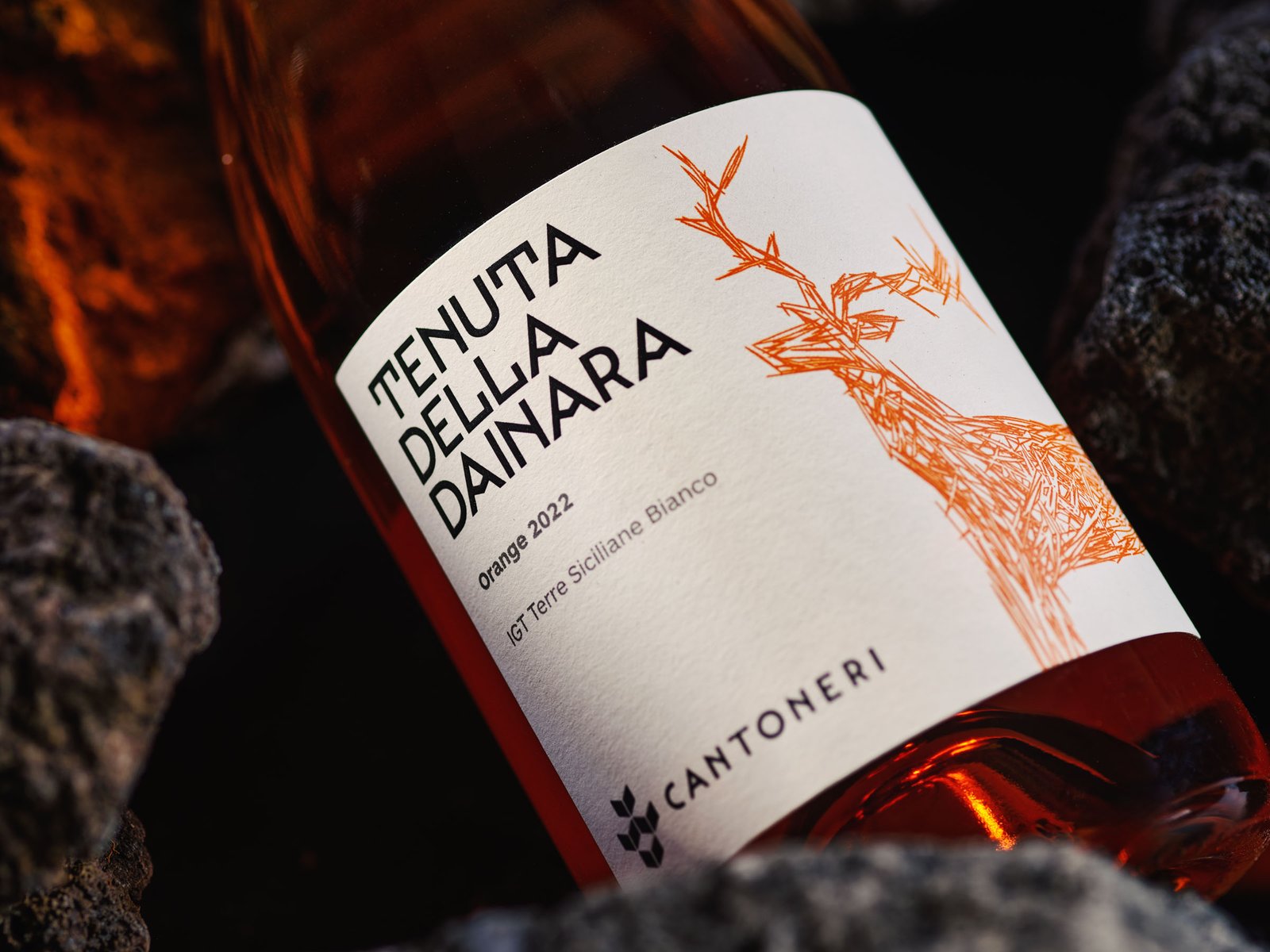
Every set has a colour reference, and the finished file is checked against the real pack, not against what you remember of it in front of a monitor. It sounds fussy until you photograph an idea as good as Sicilian Factory's transparent labels, a white pattern printed over the glass: there the colour of the marmalade is the colour of the pack, and a small shift gets two things wrong at once. The same goes for the red of a sauce, or for the paper of a label a designer chose with care.
The project Sicilian Factory · The jar and what goes into it
Glass, metal, paper: each material wants its own light
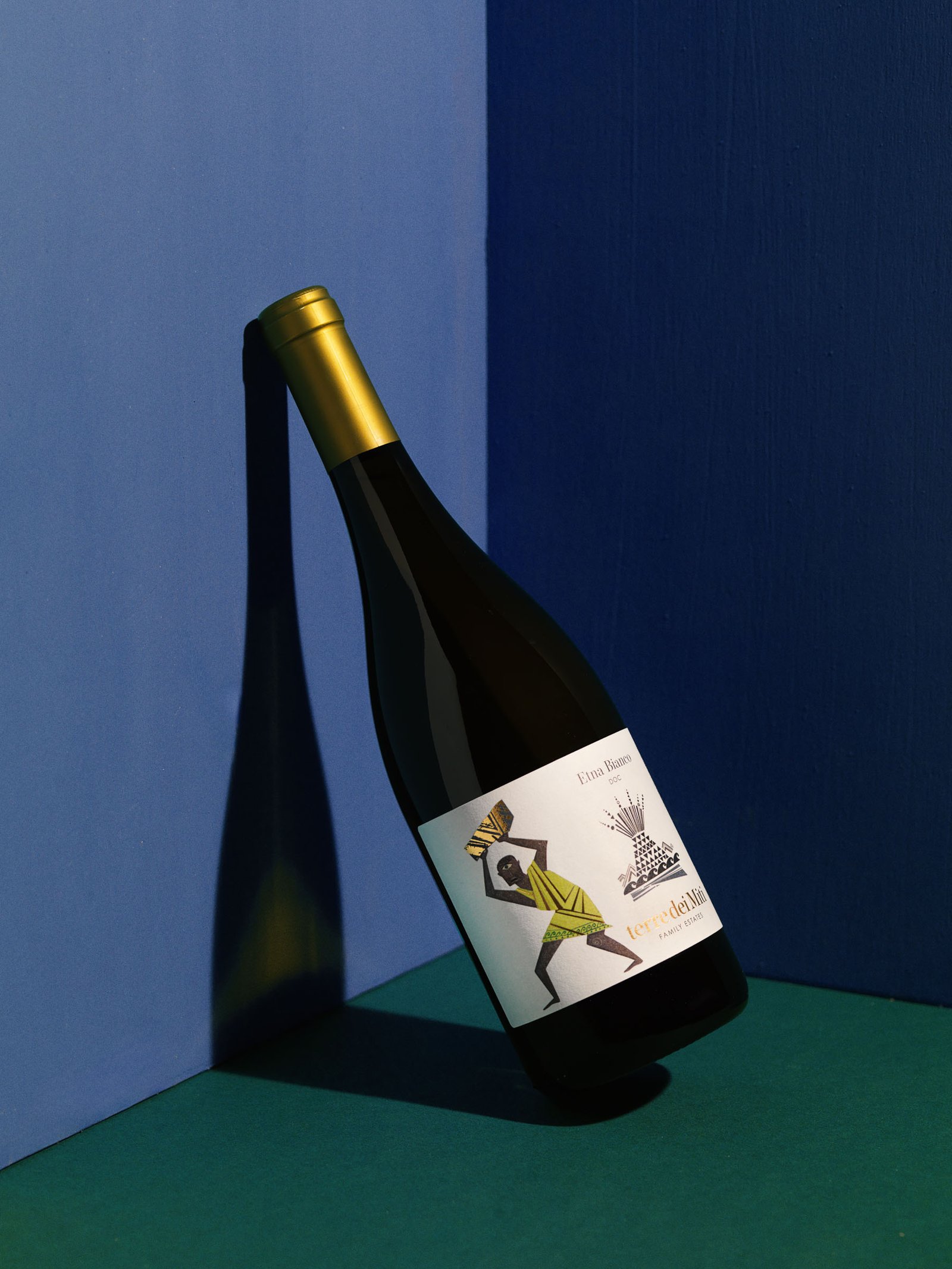
A jar is glass with a lid that works as a mirror. Gold on a label is a mirror too: a few degrees of tilt separate the highlight that lights it up from the white patch that wipes it out. A textured paper only exists when light grazes it. That is the real work of a packshot: giving the object volume without the studio reflected in it, and keeping the label flat and legible down to the last line. On the Terre dei Miti labels the metallic part is the heart of the design — the gold rock of Polyphemus, the red shards of Enceladus, the blue wave of Ciane and Anapo — and caught badly it turns grey, or black.
The project Terre dei Miti · The part that shines
Seen by the people who designed the label
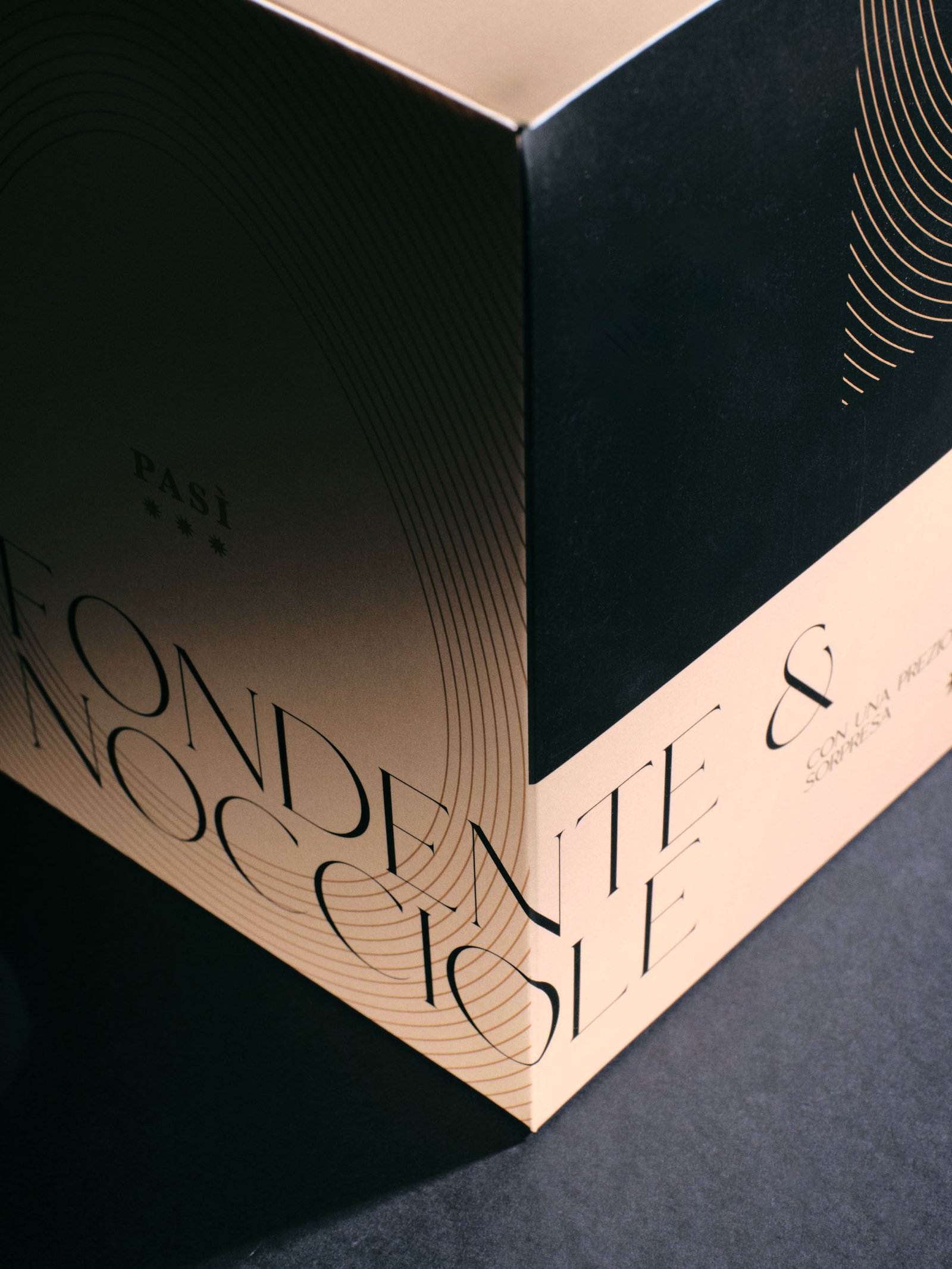
The harshest judge of a packaging photograph is whoever designed the packaging. Three design studios show their own work, photographed by us, in their portfolios: Atelier790 with labels and packs for wine, spirits, olive oil, honey and baked goods; B Factory with the Easter egg boxes for Pasì; AD Positive with the myth labels for Terre dei Miti. B Factory is also the agency that has been art-directing Fratelli Sicilia since 2025. Whoever designs a label looks at things everyone else misses: the texture of the paper, the weight of a letter, a gold that has to light up in one spot only. If the photograph holds up to that look, it holds up to the buyer's.
The projects Atelier790 B Factory AD Positive
A range that grows without a visible seam
The settings of every set are written down. When new products arrive the following year, they slot into the existing range and nobody notices: that is how this year's Fratelli Sicilia catalogue still matches the first one, from 2021. And when the calendar forces a product to be shot before its box exists — for Fratelli Sicilia, Christmas is photographed around Easter, and every year it happens to four or five products — we shoot a white box at the real size and apply the artwork later. It is the longer and costlier road, so it is kept for those cases: but photographing the real volume is what keeps shadows and reflections right.
The project Fratelli Sicilia · The boxes were still blank
Ready for every channel
You need the same product in five forms: square for the marketplace, portrait for the product page, landscape for the catalogue, clipped for whoever does the layout, high resolution for print. It is all planned on the same set and delivered already cropped and named the way you ask. One useful warning: the light background of a website and the pure white Amazon requires for the main image are not the same thing, and if you sell there the right version is prepared separately. A standard packshot job is delivered within 24 to 48 hours of the end of the shoot.
Let's talk
Tell us what needs photographing
The more detail you give us, the more precise the quote: how many products, which channels the images are for, and when you need them. We reply within one working day.